Balham removals guide Balham High Road access tips
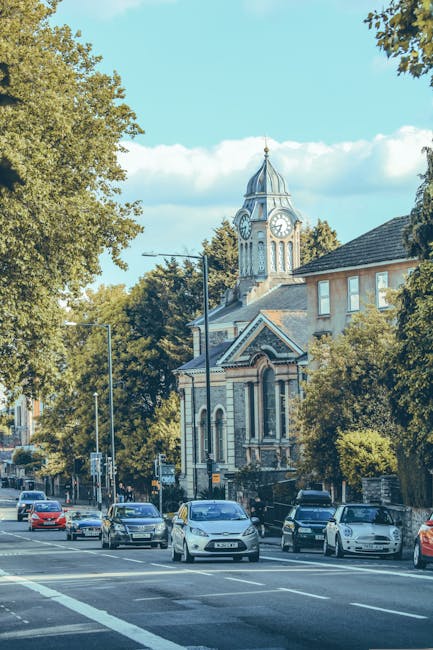
If you are planning a move in Balham, the road layout matters just as much as the boxes. This Balham removals guide Balham High Road access tips article is here to help you plan a calmer moving day, avoid awkward parking problems, and understand how to handle the busy stretch around Balham High Road without turning the whole thing into a stress-fest. Truth be told, the move itself is often the easy bit. The access is where people get caught out.
Whether you are moving from a top-floor flat, a family house, or a small office near the High Road, a few smart decisions upfront can save time, money, and a fair bit of muttering under your breath. Below, you will find practical advice, a step-by-step plan, and real-world tips for making a Balham move smoother from first quote to final box.
Why Balham removals guide Balham High Road access tips Matters
Balham High Road is lively, practical, and busy in the way London high streets tend to be: traffic moving, people crossing, buses edging through, delivery vans stopping for a moment that somehow becomes three. For removals, that means access planning is not a nice extra. It is central to the job.
The best removals in Balham usually go well because someone thought ahead about loading bays, street width, front-door access, stairwells, and how long the van can safely stay close to the property. If you skip that thinking, even a simple move can slow down fast. A sofa that would normally be awkward becomes a genuine problem if the vehicle cannot get near the entrance.
That is especially true for flats above shops, maisonettes with narrow entrances, and properties close to the busier parts of the High Road. You may only need to shift a few metres from pavement to van, but those few metres matter. They can affect labour time, vehicle size, and whether you need a second run. If you are comparing removals options or looking at a more flexible man and van setup, the access detail often decides which route is best.
Expert summary: In Balham, the smartest removals plan is usually the one that treats access as part of the move, not as an afterthought. If the vehicle, staircase, or street position is awkward, plan for it early.
How Balham removals guide Balham High Road access tips Works
At its simplest, access planning means mapping how everything gets from inside the property to the vehicle and then to the next address. That sounds obvious, but the details are where people trip up.
Here is how a well-run Balham move typically works:
- Property access is checked first. This includes door widths, stairs, lifts, alleyways, communal hallways, and where the vehicle can reasonably stop.
- Vehicle size is matched to the road. A larger van or truck may be ideal for volume, but not always ideal for a tight street or a busy high road slot.
- Loading time is estimated properly. If access is poor, the same amount of furniture can take much longer to move.
- Packing is adjusted to the route. Heavy items are grouped, fragile items are protected, and everything is planned for the shortest safe path.
- Timing is chosen carefully. Off-peak hours often make life easier around busy Balham roads.
If your move is straightforward and you only need a single van, a removal van or a flexible man with van arrangement may be enough. If there is a lot of furniture, awkward access, or a larger household move, a bigger vehicle or a full team may be a better fit.
The key point? Access planning is not just about parking. It is about the complete path. Front door, corridor, stairs, lift, pavement, kerb, vehicle tail lift if needed, and then the reverse at the other end. Miss one bit, and the whole schedule gets wobbly. Happens all the time.
Key Benefits and Practical Advantages
Good access planning gives you benefits that are easy to feel on the day, even if they sound boring on paper. And let's face it, boring is welcome when you are moving.
- Less time wasted: The team spends more time moving items and less time improvising on the pavement.
- Lower risk of damage: Tight turns, repeated lifting, and rushed carrying are where furniture gets knocked or scratched.
- Better cost control: If the job is planned properly, you are less likely to pay for avoidable delays.
- Reduced neighbour friction: Clear timing and sensible vehicle positioning help avoid complaints and blockages.
- Less physical strain: A shorter carrying distance is easier on everyone, especially for heavier items.
- More accurate quotes: When access is discussed early, the estimate is more realistic.
There is also a psychological benefit, which people underestimate. When the van arrives and the route is already mapped out, the day feels under control. The energy changes. People stop asking, "Where is that going to fit?" and start simply getting on with it.
For families, students, and flat movers in particular, that calm can make a big difference. If your move needs secure holding time, you might also want to think about storage as a buffer if access timing is messy or keys are delayed.
Who This Is For and When It Makes Sense
This guide is for anyone moving in or around Balham High Road, but it is especially useful if your situation is a little awkward. And in Balham, a lot of places are a little awkward. That is not criticism; it is just London geometry.
You will get the most value from this if you are:
- moving from a flat above a shop or cafe on or near the High Road;
- dealing with narrow frontages, steps, or shared entrances;
- moving at a time when traffic is likely to be heavier;
- unsure whether a van, truck, or full removals crew is the best fit;
- organising a family home move with awkward furniture;
- planning a student move where budget and speed matter;
- moving an office or small business where access must be kept tidy and efficient.
It also makes sense if you are comparing services. For example, a compact job might suit man with a van or man and van style support, while a larger household may need full house removals or a more tailored home moves package.
If you are moving business premises, the access problem becomes a time problem very quickly. That is where commercial moves or office removals are often the more suitable route, because they can be planned around trading hours, entrances, and loading constraints.
Step-by-Step Guidance
Here is a practical way to handle a Balham High Road move without overcomplicating it. Simple, but not simplistic.
- Survey the access on foot. Walk from the front door to the street and notice every pinch point. Look at stair landings, door swings, and whether furniture will have to turn corners.
- Check where the vehicle can stop. The ideal spot may not be the nearest spot. Think about what is actually safe and sensible for the day.
- Measure the awkward items. Sofas, mattresses, wardrobes, and fridges are the usual troublemakers. A quick measurement can save a lot of guesswork.
- Decide whether packing needs to change. Use stronger boxes for books, and keep fragile items separate. If you need help, packing and boxes or packing and unpacking services can take a lot of pressure off.
- Choose the right vehicle size. Too small and you make extra journeys; too large and the vehicle may be awkward on the road or harder to position.
- Plan the order of loading. Put the largest and heaviest items first, then fill around them with smaller items and soft furnishings.
- Pick the best time window. If possible, avoid the worst traffic periods and think about school runs, weekend shopping, and local delivery peaks.
- Prepare the building and neighbours. If you share a building, let people know what time the move is happening. It is basic courtesy, but it helps.
- Keep a clear path. Move bikes, plant pots, bins, and loose clutter out of the way before the team arrives. It sounds small. It is not small.
- Leave room for the unexpected. A little slack in the schedule makes the day feel much less rushed if traffic or access changes.
A good rule of thumb is this: if you cannot describe the route from sofa to van in under a minute, the move probably needs more planning. Not panic. Just planning.
Expert Tips for Better Results
These are the kinds of details that usually separate a smooth move from a slightly chaotic one.
- Use a parking plan, not a hope. Know in advance whether the van can wait, unload quickly, or needs a timed slot.
- Label awkward or urgent items. If something must come off first, mark it clearly.
- Keep the kettle, chargers, and documents separate. It sounds obvious, yet people still pack them in the last box. Then the first evening becomes weirdly uncomfortable.
- Protect walls and corners. In narrow Balham entrances, one careless turn can mark plaster or paint very easily.
- Use furniture protection for delicate pieces. Blankets, covers, and straps do more than make the van look tidy.
- Think about the second address too. Access at the new place can be just as awkward as the old one.
If your furniture is heavy, valuable, or unusually shaped, talk early about specialist handling. A piano, for example, is not just a heavy box with legs. It needs proper planning, so services such as piano removals exist for a reason. Same with bulky single items that need furniture removals rather than a basic lift-and-go approach.
Another useful habit: take a few photos of access points before moving day. Nothing fancy. Just enough to remind yourself what the stair angle looks like or how tight the hallway is. In the moment, those photos are worth gold.
Common Mistakes to Avoid
Most moving problems are not dramatic. They are just avoidable. Which is, honestly, the most annoying kind.
- Assuming the van can stop right outside. On a busy road, that is not always realistic.
- Ignoring stair width or lift size. A wardrobe that seems manageable in theory can become a very different beast on a tight landing.
- Underestimating the amount of stuff. One more bag, one more lamp, one more kitchen box. It adds up fast.
- Packing without a system. Random boxes create delay at the other end when everyone is hunting for essentials.
- Not allowing time for traffic. Balham is not the place to build a schedule that only works if every light turns green.
- Forgetting access on both ends. The old home and the new one both matter. People forget the second property more often than you would think.
One of the most common issues is also one of the easiest to solve: not sharing enough detail in advance. If the removal team does not know about a very narrow entrance, a basement flat, or a tricky parking position, they cannot plan for it properly. That is where quotes can become misleading.
If your move is on a tight budget, compare options carefully and ask for a realistic estimate through pricing and quotes. Transparency matters here more than polished sales talk.
Tools, Resources and Recommendations
You do not need a suitcase full of gadgets to move well, but a few basic tools make life easier.
- Measuring tape: Essential for checking furniture and doorway fit.
- Marker pens: Great for box labels and room names.
- Felt pads and covers: Useful for protecting furniture and floor surfaces.
- Stretch wrap or blankets: Good for securing drawers, table tops, and delicate finishes.
- Phone camera: A quick photo record can help with access planning and unpacking order.
- Box checklist: A simple handwritten list can be enough if you do not want to manage an app.
For bigger jobs, a proper removals team is often the best tool of all. If you need a fuller service, look at removal services rather than trying to stitch everything together yourself. If the job is about a house move with lots of contents, house removalists can be a better fit than a bare-bones van hire arrangement.
For smaller or quicker jobs, a removal van can work well, especially where access is tighter and speed matters. And if the job needs a bit of extra flexibility without a full team, man with van support can be a practical middle ground.
Law, Compliance, Standards, or Best Practice
Moving house is not usually a heavily regulated event in the way a construction project might be, but there are still important standards and duties to keep in mind. Good practice protects people, property, and the reputation of everyone involved.
At a practical level, removals work should follow sensible health and safety principles: clear walkways, safe lifting, suitable equipment, proper vehicle loading, and care around public pavements and communal spaces. If a mover is working in a building with shared access, they should take extra care not to block escape routes or create trip hazards. That is basic, but important.
Insurance also matters. If you are trusting someone with furniture, appliances, and personal items, you want to know what protection is in place if something goes wrong. It is reasonable to ask how goods are handled, what happens in the event of damage, and how complaints are managed. For an overview of that side of the service, the pages on insurance and safety, health and safety policy, and terms and conditions are useful starting points.
If sustainability matters to you, it is also worth checking whether unwanted items can be reused, recycled, or responsibly removed. Recycling and sustainability is not just a nice phrase; it is part of good moving practice when you are clearing out furniture or older household goods.
And on a human level, good service means clear communication, honest expectations, and respectful handling of the property. Nothing flashy. Just decent standards.
Options, Methods, or Comparison Table
Choosing the right moving method depends on access, volume, timing, and how much help you want on the day. Here is a straightforward comparison.
| Option | Best for | Access advantage | Possible drawback |
|---|---|---|---|
| Man with van | Smaller loads, student moves, quick local jobs | Flexible and easier to position on busy streets | May need extra trips for larger moves |
| Removal van | Moderate-sized household moves | Good balance between capacity and manoeuvrability | Still depends on parking and stair access |
| Full removals service | Family homes, more furniture, more coordination | More hands can make awkward access easier | Usually more planning required |
| Office relocation | Businesses moving equipment, files, furniture | Can be scheduled around access and downtime | Needs tighter coordination and timing |
| Same-day support | Urgent moves or last-minute changes | Useful if timing has shifted unexpectedly | Less room for detailed preparation |
If you are still unsure, a good rule is to match the service to the access problem first, and the volume second. People often do the reverse. Then they wonder why the van is fine but the staircase is not. Which is a very London kind of problem, really.
For urgent situations, same-day removals can be a practical option, while smaller moves such as student flats may be better served by student removals.
Case Study or Real-World Example
Imagine a two-bedroom flat just off Balham High Road. The lift is small, the hallway bends sharply, and the van cannot sit directly outside for long because the street is busy. Nothing impossible, but enough to make the job feel awkward if nobody has thought it through.
In a situation like that, a sensible plan would usually include:
- a morning slot before the street gets busier;
- advance confirmation of where the vehicle can load;
- careful packing of the largest furniture first;
- a clear route through the flat so boxes are not stacked in the way;
- protective wrapping for corners and delicate surfaces;
- a second check that the new property has enough access on arrival.
Now compare that with a rushed job where the team arrives, realises the van is too large for the easiest stopping point, and has to improvise while the clock is running. The furniture may still get moved, of course, but the day gets longer and more tiring. Sometimes much longer.
That is why local knowledge matters. It is not about being clever for the sake of it. It is about reducing friction. One well-timed decision can save half an hour of awkward manoeuvring, or more, and half an hour is a big deal when you are carrying wardrobes up stairs.
Practical Checklist
Use this checklist a few days before the move, and again on the morning itself if you can.
- Confirm the moving date, arrival time, and access arrangements.
- Check whether parking or stopping is realistically available near the property.
- Measure wide furniture, doorways, stair turns, and lift dimensions.
- Label boxes clearly by room and priority.
- Separate valuables, documents, chargers, and daily essentials.
- Protect floors, corners, and furniture surfaces where needed.
- Tell neighbours or building management about the move if relevant.
- Keep corridors, entrances, and pavements clear before loading starts.
- Have water, snacks, and a charger available for a long moving day.
- Check the new address access before the van sets off.
Quick takeaway: if access is tricky, plan the route like a mini project. Not a big drama, just a proper plan. That's usually enough.
Conclusion
A move around Balham High Road does not need to be stressful, but it does need to be thought through. The properties are varied, the roads are busy, and access can change the whole shape of the job. Once you plan for that properly, everything becomes more manageable: the quote is more realistic, the van choice is smarter, and moving day feels far less chaotic.
Keep the focus on practical access, clear timing, and the right level of support for your load. If you are moving a smaller flat, a van-based service might be enough. If you are handling a larger home or a business move, it is worth choosing a team that understands local access pressure and knows how to work around it without fuss.
Get a free quote today and see how much you can save.
And if you only remember one thing from this guide, let it be this: a calm move is usually built before the van arrives. That bit matters more than people think. Really, it does.
Frequently Asked Questions
What is the main benefit of planning access around Balham High Road?
The main benefit is that you reduce delays and avoid awkward last-minute parking or carrying problems. It also helps you choose the right vehicle and gives you a more realistic moving schedule.
Should I book a van or a full removals team for a Balham flat move?
It depends on the size of the move and how tricky the access is. A smaller flat with straightforward access may suit a van-based service, while a bigger flat or a building with stairs, tight corners, or limited stopping space may need a fuller team.
How early should I think about parking and stopping space?
As early as possible. Ideally, parking and loading arrangements should be discussed when you ask for a quote. Leaving it until moving day is where things start to wobble.
What should I measure before moving day?
Measure your biggest furniture, the narrowest doorways, stair turns, and lift dimensions if you have one. Those few measurements often tell you whether a sofa or wardrobe will need special handling.
Is Balham High Road difficult for removals?
It can be, depending on the time of day, traffic, and exact property location. The High Road is busy enough that access planning is worthwhile even for smaller moves.
What if my building has no lift?
Then stair access becomes a major part of the plan. You may need extra time, more hands, and careful packing so heavy items are easier to carry safely.
Can I move on the same day if my plans change suddenly?
Sometimes, yes. It depends on availability and how much needs moving. Same-day support can work well for smaller or urgent jobs, but the less notice you have, the less room there is for perfect planning.
What services help most when access is awkward?
For smaller moves, a flexible van service can help. For larger or more complicated moves, fuller removals support, packing help, or even storage can make the day much easier.
How do I reduce the risk of damage during a move?
Use proper packing, protect corners and surfaces, keep walkways clear, and make sure the route from property to vehicle is planned in advance. Good lifting technique matters too, of course.
Are there any best-practice checks I should ask a removals company about?
Yes. Ask about insurance, safety practices, timing, handling of fragile items, and what happens if access is more difficult than expected. Clear answers are a good sign.
What if I need to store items between moves?
That can be a useful solution if keys are delayed, access is limited, or the new place is not ready. Short-term storage is often the pressure valve that keeps everything moving.
How can I make the move less stressful overall?
Pack early, label properly, confirm access details, and choose the right level of removals support. A little preparation goes a long way, and the day usually feels much calmer for it.